
Toy Triple - 3D Match Puzzle
Skylink StudioBoard
4.6527.00 Reviews
- Version
- 6.7.8
- Installs
- 1.00M
- Age Rating
- Everyone
Screenshots
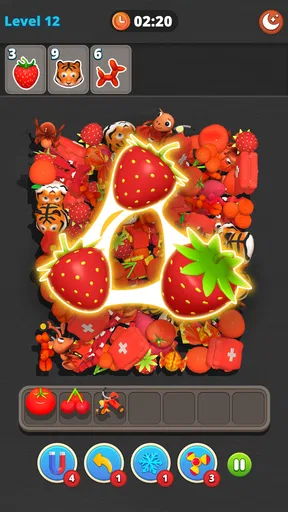
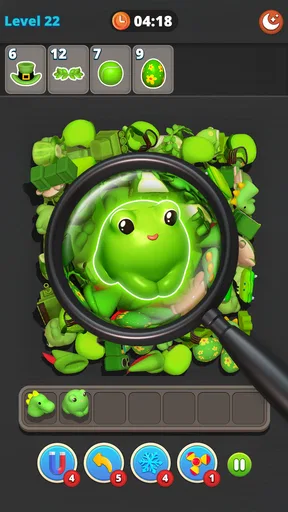
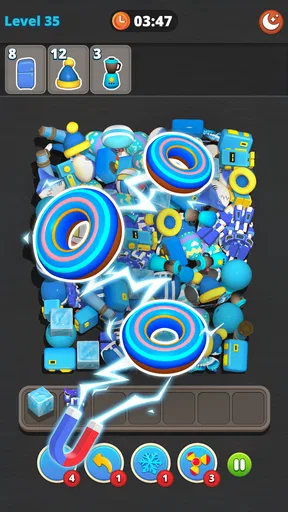
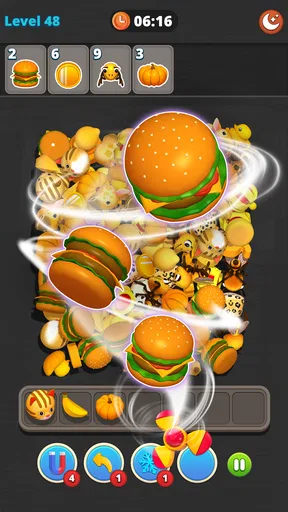
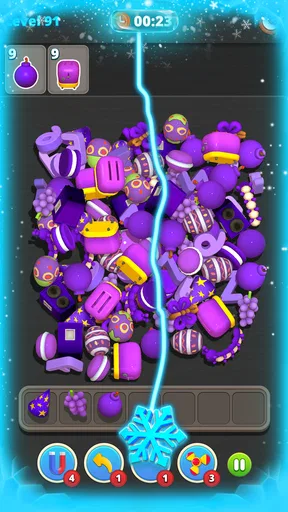
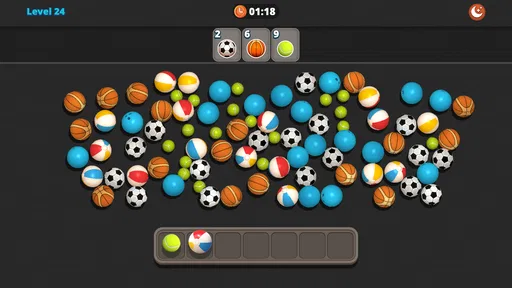
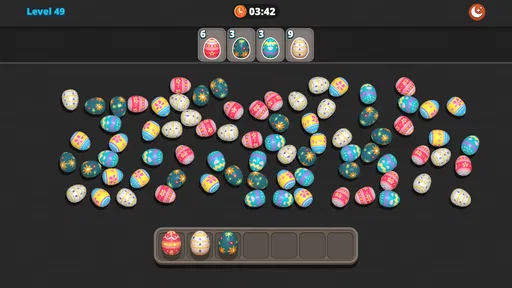
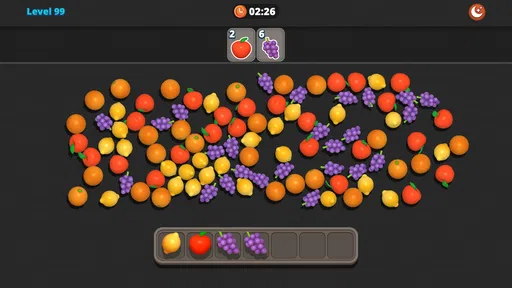
Our Review of Toy Triple - 3D Match Puzzle
 Analysis by Appyee
I went into Toy Triple - 3D Match Puzzle expecting a simple matching game, and that is exactly where its appeal begins. The board presents three-dimensional toy-like objects, and the basic task is to find three matching pieces and clear them. It is easy to understand within a few seconds, but the changing arrangement makes each level feel more active than a flat, repetitive matching exercise. I found it particularly comfortable for short sessions when I wanted something light rather than a demanding strategy game.
Developed by Skylink Studio, this free board game is aimed at Everyone and runs on Android 7.0 or later. It has passed the casual-test stage for many players, with over a million installs and a 4.6 average from around twenty-one thousand ratings. Those figures do not make it automatically perfect, but they do match my impression: this is a broadly accessible puzzle built around quick decisions, visual scanning, and a steady feeling of progress.
How the basic play loop feels in everyday use
The normal workflow is pleasantly direct. I look over the available objects, identify a group of three that appears to match, and tap them one by one. The satisfaction comes from watching the selected toys disappear and expose pieces that were hidden underneath or surrounded by other objects. That means the best move is not always the first obvious match. Sometimes it is smarter to clear an accessible group that opens the board, even when another trio is easier to spot.
This creates a useful difference between seeing a match and choosing a good match. New players can simply hunt for identical items, while experienced players start considering what each removal will reveal. I recommend taking a brief pause before tapping quickly, especially when the board is crowded. A few seconds of scanning can prevent the common mistake of using a useful opening on a trio that leaves the remaining objects awkwardly blocked.
The game works well in an ordinary daily situation. I can imagine opening it while waiting for a coffee, playing a level during a short break, and putting the phone away without needing to remember a complicated story or a long chain of objectives. It also suits a quiet evening when I want a little mental activity without committing to a full board-game session. The levels are easy to approach in small portions, which is one of its strongest practical qualities.
That simplicity also explains the main limitation. If you want deep planning, a large competitive community, or a traditional board-game ruleset, this is not the right substitute for chess, checkers, or a serious strategy title. The challenge comes from recognition and ordering rather than from long-term tactical systems. I enjoy that distinction, but someone looking for complex decision trees may find the experience too gentle.
What I check before tapping
My first habit is to scan the whole visible area instead of immediately selecting the nearest pair. I look for repeated shapes, colors, and small details, because three-dimensional objects can look similar from a quick glance while still belonging to different groups. Once I find a possible trio, I check whether removing it will uncover another useful section of the board. This turns each move into a small question: does this clear space, or does it merely reduce the count?
I also try to keep the board visually organized in my mind. When several objects are close together, I mentally separate them into front, middle, and rear layers. That makes it easier to notice which pieces are actually available and which ones are partly hidden. It is a simple method, but it reduces random tapping and helps me avoid losing track when the board becomes busy.
A second useful habit is to delay uncertain matches. If I can see two identical objects but cannot confidently locate the third, I leave them alone and search elsewhere. Tapping the first two can make the board harder to read, especially if the third item is covered. I would rather make a confirmed trio than start a chain that depends on guessing.
When I am playing casually, I do not treat every level as a test of speed. A slower, deliberate approach is usually more reliable than frantic tapping. That matters for people who want the game as a relaxing brain exercise. The pressure, where it exists in a particular level, is more manageable when I focus on clearing space and preserving options rather than trying to move at maximum speed from the beginning.
Settings and phone habits that make a difference
There is no reason to change every option simply because a game offers them. I usually begin by checking the sound controls and notification behavior available on my device or within the game. For a quiet commute or a shared room, I prefer playing with sound reduced or muted. The visual feedback is enough for me to understand a successful match, and removing audio makes the experience less intrusive.
I also check whether the display is comfortable before starting a longer session. Three-dimensional objects depend on being distinguishable at a glance, so screen brightness and text or interface scaling can affect how quickly I recognize a match. I avoid playing with the screen so dim that similar toys blend together. On the other hand, maximum brightness is unnecessary indoors and can make a short puzzle session less pleasant.
Because the game is free, I pay attention to anything that may lead toward an in-app purchase rather than tapping automatically through every prompt. Optional purchases range from $0.99 to $89.99 per item, so I would not hand the phone to a child without first considering the device’s purchase protections. The Everyone age rating makes the game broadly suitable, but an age rating does not replace sensible account and payment controls.
My practical rule is simple: play a few levels without buying anything, decide whether the core loop is enjoyable, and only then consider whether an optional purchase would genuinely improve the experience. I would not spend money to solve every difficult board. The satisfaction of this type of puzzle comes from learning to read the layout, and relying on purchases too early can remove the reason to develop that skill.
It is also worth keeping the app updated when a new version is available through the normal store process. The current version is 6.7.8, and using the current release is generally the sensible starting point for anyone installing it now. I do not treat a version number as a promise that every device will behave identically, though. Older phones can still feel less comfortable if the board contains many small objects or if the display is cramped.
Patterns that help me clear boards faster
The fastest reliable pattern is not simply “tap the first three matches.” I start with exposed trios that sit near the top of a crowded arrangement, because clearing them may reveal several new options. If a trio is already easy to access and does not block anything, I may leave it for later while I investigate the more restrictive area. This is a small form of board management: remove what limits future choices before removing what is merely convenient.
I also group objects by visual family before selecting them. For example, I may first notice all the rounded items, then the brightly colored pieces, and then the objects with distinctive handles or edges. This reduces the mental cost of searching randomly. The method is especially useful when the board contains many toy shapes that are similar in size but differ in small identifying details.
Another strong habit is to avoid creating a mental pile of unfinished pairs. If I repeatedly select two items and wait for a third, I make the board harder to remember. I prefer completing a trio whenever possible. When that is not possible, I remember only a small number of promising pairs and then return to the widest open area. In practice, this keeps my attention on available moves instead of turning the whole screen into a list of uncertain possibilities.
When the board opens after a removal, I pause and rescan rather than continuing with the old plan. Newly visible objects can change the best move immediately. This is one of the most important differences between a beginner’s routine and a more experienced one: the board is not static, so a plan made before a clearing action may already be obsolete afterward.
I find that short repeatable sessions are better than forcing a long run. A few focused levels help me recognize object patterns and maintain a clear visual memory. If I keep playing after I become careless, I start selecting based on color alone and overlook shape differences. Taking a break is not just about comfort; it protects the careful observation that the game actually rewards.
Where the challenge stops being deep
Toy Triple is good at creating small moments of concentration, but its depth has a ceiling. The central action remains matching three objects, so the long-term learning curve is mainly about scanning faster, managing the order of removals, and staying calm when the layout is dense. That is enough for a casual puzzle, yet it will not satisfy everyone who wants evolving rules or a large strategic toolkit.
Compared with a conventional match-three game on a flat grid, the three-dimensional presentation makes object recognition more important. Grid-based alternatives often let me plan through rows, columns, cascades, or fixed spatial relationships. Here, the challenge is more visual and tactile: I need to distinguish objects in a cluttered arrangement and understand what is available. I prefer this when I want a change from colored gems or tiles, but players who enjoy predictable grid mathematics may find the toy-board format less precise.
Compared with classic board games, the sessions are more disposable and less social. There is no need to wait for another player, learn a long rulebook, or protect a carefully built position over many turns. That makes the game more convenient, but it also means the result does not carry the same strategic weight as a match of chess or a thoughtful card game. I would choose this for a quick reset, not for a serious game night.
The free-to-play structure is another trade-off. The entry cost is zero, which makes it easy to try, but the presence of optional purchases can affect how comfortable the experience feels for different users. I am happiest treating purchases as entirely optional and using the core game as a short pastime. Anyone who dislikes in-app purchase prompts in casual games should approach it cautiously and configure device-level protections before sharing access.
It is also not my first recommendation for someone seeking a completely quiet, minimalist puzzle environment. The toy styling is part of its identity, and the changing visual arrangements are more playful than austere. If you prefer number puzzles, word games, or a clean abstract board, a different category will probably fit better. The right audience is someone who enjoys finding familiar objects in a lively three-dimensional layout.
Who will get the most from it
I would recommend it to people who like matching games but want more visual texture than a standard flat board provides. It is a good fit for short breaks, relaxed concentration, and players who enjoy improving a repeatable process rather than mastering a complicated ruleset. The Everyone rating also makes it approachable for a broad audience, although younger players should still use the usual purchase safeguards on a shared device.
It can also work as a gentle attention exercise. I like that it encourages me to slow down, compare details, and plan the order of a few actions. I would not describe it as a formal training tool, but it gives the mind something specific to track without demanding a large time commitment. That balance is useful when I want to stay engaged while avoiding a stressful competitive game.
I would skip it if my priority is multiplayer interaction, a campaign with a strong narrative, or highly transparent strategic depth. I would also skip it if I become frustrated by free games that include optional spending. In those cases, a paid puzzle with a fixed structure or a traditional board-game adaptation may offer a cleaner experience, even if it lacks the toy-focused presentation that makes this title distinctive.
My final verdict after building a repeatable routine
After settling into a routine of scanning first, clearing restrictive groups, and rescanning after every opening, I found the game more satisfying than its one-line premise suggests. The mechanics remain simple, but the order of actions matters enough to reward attention. I especially like that a level can be approached casually while still offering small improvements for anyone willing to develop better visual habits.
Skylink Studio has made a focused board game rather than an all-purpose entertainment package. Its strengths are accessibility, quick sessions, recognizable objectives, and the added challenge of matching objects in a three-dimensional arrangement. Its weaknesses are equally clear: limited strategic depth, possible friction around optional purchases, and a format that may feel repetitive to players who need constant mechanical change.
My recommendation is to try it as a low-commitment puzzle, not as a replacement for a full board-game collection. Start with sound and notification settings that suit your surroundings, protect purchases if children use the device, and give yourself time to learn the board-reading rhythm instead of tapping at random. For me, that makes Toy Triple a pleasant everyday brain break: easy to enter, satisfying in short bursts, and best when I treat careful observation as the real skill behind every match.
Verdict
Strengths of Toy Triple - 3D Match Puzzle
- Relaxing gameplay suitable for short breaks
- Bright 3D visuals make objects easy to recognize
- Frequent events add variety beyond standard levels
- Helpful boosters can rescue difficult rounds
- Simple controls work well on phones and tablets
Limitations of Toy Triple - 3D Match Puzzle
- Some levels may feel repetitive after extended play
- Limited moves can make later stages frustrating
- Boosters may be difficult to earn without extra play
- Small objects can be challenging on compact screens
- Progress may depend heavily on an active internet connection
Similar Picks in This Category
View All
Ludo King®
Gametion4.1

Ludo
Yarsa Games4.6

Tile Master® - Matching Game
Higgs Studio3.6

Checkers Online
CC Games4.6

Dominoes
Loop Games4.7

Chess
Chess Prince4.6
Frequently Asked Questions
What is Toy Triple - 3D Match Puzzle and how do you play it?
Toy Triple - 3D Match Puzzle is a casual matching game centered on colorful three-dimensional toys and objects. The main goal is to find three identical items and place them together to clear them from the board. As you progress, levels usually become more crowded and require better observation, faster decisions, and careful planning to avoid filling the available tray.
Is Toy Triple - 3D Match Puzzle suitable for beginners and children?
The game is easy to understand because its core rule is based on matching three identical objects. Early stages work well as a gentle introduction, with bright visuals and straightforward controls that do not require gaming experience. However, later puzzles can become more demanding, so younger players may occasionally need help with planning, recognizing partially hidden toys, or managing the limited matching space.
Does Toy Triple - 3D Match Puzzle require an internet connection?
Many puzzle games can be played without a constant connection, and Toy Triple - 3D Match Puzzle may allow at least some gameplay while offline. Nevertheless, internet access can be necessary for advertisements, daily rewards, cloud features, event content, or restoring purchases. Availability may also vary by device version, so it is best to test the game offline after installation rather than assume every feature will work.
Are there advertisements or in-app purchases in Toy Triple - 3D Match Puzzle?
Players should expect that a free-to-download match puzzle may include advertising and optional in-app purchases. Ads can appear between stages or when you choose to receive extra rewards, hints, or additional chances. Purchases may provide boosters, coins, or an ad-removal option. Before downloading, review the store listing and your device’s purchase settings, especially if children will use the application.
What should I know about difficulty, boosters, and replay value before downloading?
Toy Triple - 3D Match Puzzle is designed for short, repeatable sessions, making it suitable for casual play during breaks. The challenge comes from identifying matching toys among many objects while protecting the limited tray space. Boosters or hints can help when a board becomes difficult, but using them strategically is important. Players who enjoy visual sorting and gradually harder levels will likely find the progression engaging.
Play our best games!


